An intro….
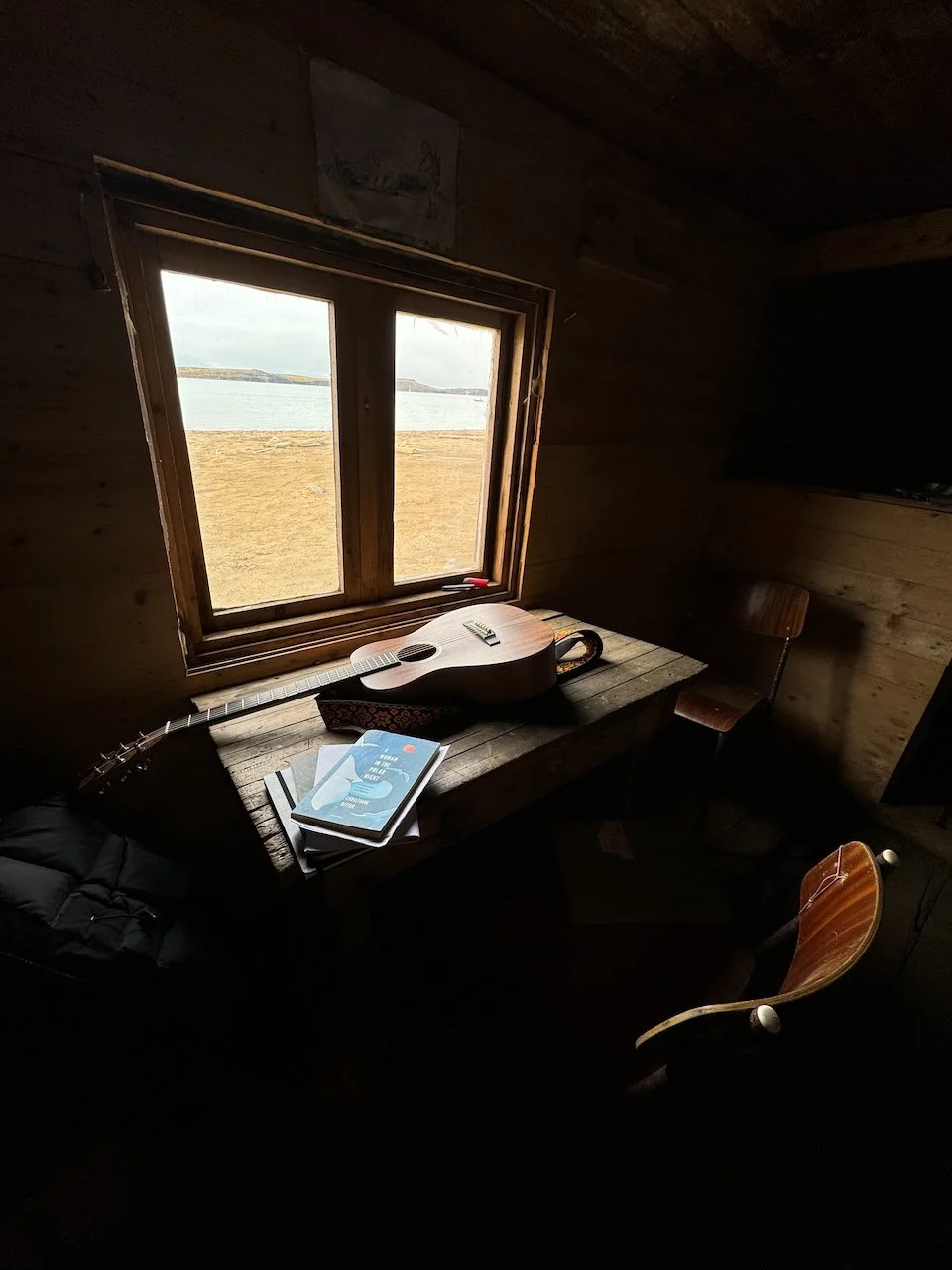
In the summers of 2016 and 2024, I traveled to Svalbard, the Arctic archipelago north of Norway, chasing a set of feelings that arose in me after reading the memoir, A Woman in the Polar Night, by Austrian painter and writer Christiane Ritter. The book recounts Ritter’s year living in a primitive 10-by-10-foot hut with her husband and his hunting partner in 1934.
I read the book in one inhale. Ritter is a visual writer, her prose spare, honest, utterly without sentimentality. The instant I finished the book, I had a soul-deep knowing about two things. First, I had to get to the Arctic somehow, someway, and see this astonishing landscape with my own eyes before it melted and was gone for good. And second, I knew that someday I would write a set of songs using Ritter’s story as a springboard.
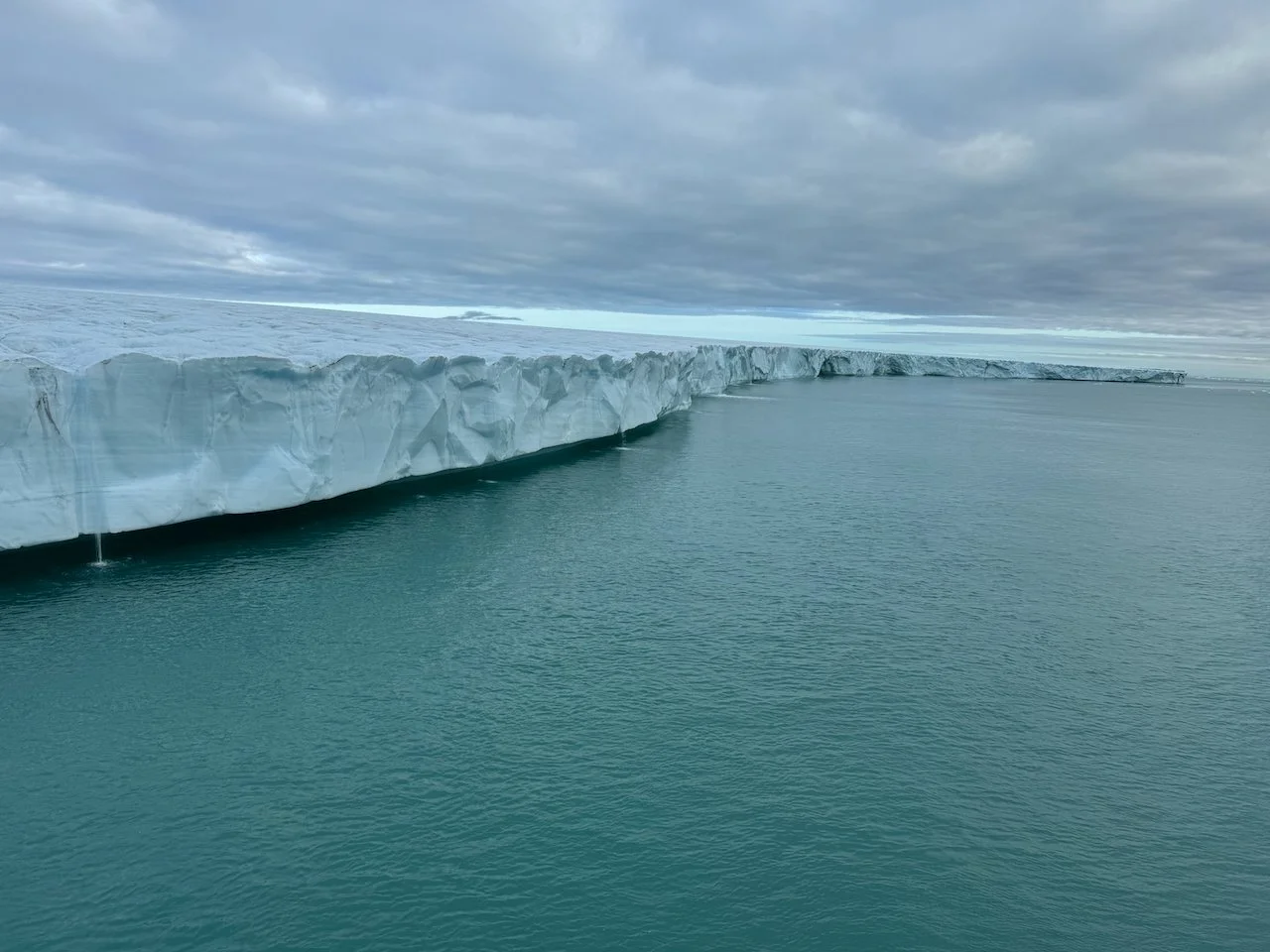
What I couldn’t know then was what would happen to me when I finally did get to Svalbard. Those enormous, black, crumbling mountains, those infinite vistas of bubbling, hissing pack ice, that burning, magnetic, never-setting summer sun…being there rearranged my atoms.
My first trip to the Arctic was eight months after the death of my mother. I had given up my music career to care for her for the four-and-a-half years of her dying. The Big White (as the Arctic has been called by others) was, surprisingly, just where I needed to be in the aftermath of that loss. The endless edifices of ice and rock dwarfed me, annihilated me. Truth is, I wanted to be annihilated. There was space for my grief in the indifferent immensity of this ultimate elsewhere.
That death was evident everywhere was a comfort to me: bones of birds and reindeer, skulls of polar bears and foxes, lunar-like mud fields left by dying glaciers. From an ancient, decaying whale bone the size of a Fiat grew a clump of the most shockingly-vibrant miniature flowers, an irradiated pink against the monochrome grey shoreline. Death begetting life begetting death and me there to witness, every so briefly, the whole cycle whirling, swirling, and singing itself into and out of existence.
The music of Ritter’s prose got mixed up with the soundscape I heard up there. I needed to capture it, to sing my own way into that place. Ritter’s willing leap into such an elemental life, at a time when women not only didn’t do such things but were actively denied them, is one of the reasons I found her story so intoxicating. I wrote these songs to find my own answers to the questions her story asks: How does living so close to the bone change you? What’s left of the self when the distractions and decorations are gone? What happens when you return to your “real” life back home in civilization? Do you ever recover?
The writer Gretel Erhlich has said her highest aim is to “give the page the same qualities as earth: weather would land on it harshly; light would elucidate the most difficult truths; wind would sweep away obtuse padding.” That’s exactly what I tried to do with the music of Goner: sing a wind-blown, ice-encrusted song.